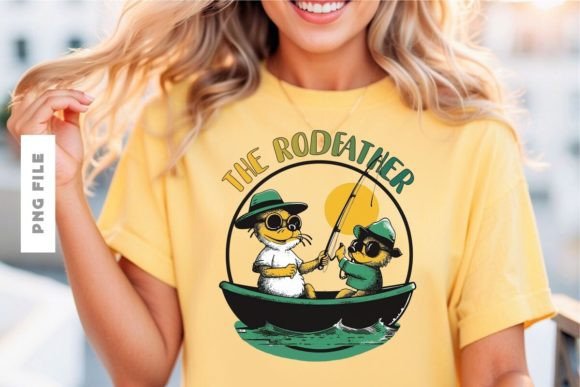
The Rodfather T-Shirt Design: A Tribute to Grit and Style
There's a certain kind of graphic that doesn't just sit on a shirt—it tells a story the moment someone sees it. The Rodfather T-shirt Design is that kind of graphic. It's not merely a clever play on words; it's a fully realized piece of visual storytelling that taps into a deep well of cultural recognition and reimagines it for a specific passion. For anglers, outdoor brands, and anyone who appreciates a design with attitude and narrative weight, this asset is more than a printable file—it's a conversation starter.
Beyond the Pun: The Visual Anatomy of a Strong Design
What makes a design like this work isn't just the witty reference. It's the execution. The Rodfather design typically employs a bold, iconic composition reminiscent of classic movie posters or vintage signage. Think strong, central typography, a stylized silhouette of the "godfather" figure—perhaps holding a fishing rod instead of a puppeteer's strings—and a color palette that can range from stark, high-contrast black and white to rich, sepia-toned or muted vintage hues. This isn't a delicate, whimsical illustration; it's a design with presence, built for visibility on a garment.
The visual language speaks to a mature, confident audience. It avoids trendy, fleeting styles in favor of a timeless, almost gritty aesthetic that conveys experience and a no-nonsense appreciation for the craft. For a brand, this translates to instant character. It’s a design that feels established, not like a startup's first attempt. This kind of visual consistency is foundational for building brand recognition, especially in niche markets where authenticity is currency.
From Screen to Stitch: Practical Applications for Your Business
The true value of a premium design asset lies in its versatility. The Rodfather T-shirt Design, provided as a high-resolution PNG and PDF file at 300 DPI, is engineered for production. This isn't just a graphic for a one-off personal project; it's a commercial-grade asset ready for mass deployment across your entire product line and marketing ecosystem.
For a clothing brand or print-on-demand entrepreneur, the applications are immediate and extensive:
- Core Merchandise: Obviously, it's perfect for t-shirts and hoodies. But consider expanding to heavy-duty canvas tote bags for the outdoor market, sturdy aprons for the garage or BBQ enthusiast, or even branded hats.
- Branded Packaging & Marketing: Use the design on shipping boxes, tissue paper, or as a bold graphic on hang tags. It can serve as the hero image for a targeted email campaign or a Facebook ad aimed at fishing clubs and outdoor adventure groups.
- Digital Presence & Content: The design makes for a striking profile picture or banner image for social media channels. It can be adapted into YouTube video thumbnails for fishing vloggers, used as a featured image for a blog post on "Gifts for the Angler Dad," or even incorporated into the header of a niche e-commerce website to establish immediate thematic coherence.
- Physical & Print Collateral: Beyond apparel, imagine this design on posters for a local bait shop, as the cover for a fishing tournament program, or as a unique invitation graphic for a "big catch" celebration party.
The file's compatibility with digital printing, sublimation, and screen printing means you're not locked into one production method. You can scale from a small batch of DTG-printed tees for your online store to a large run of screen-printed hoodies for a wholesale order, all using the same master file. This flexibility is crucial for managing costs and inventory as your business grows.
Making It Your Own: Color, Context, and Cohesion
One of the most powerful features highlighted in the asset's description is its suitability for application on any t-shirt color. This is a significant practical advantage. A poorly designed graphic can disappear on a dark shirt or look garish on a light one. A well-constructed file, however, gives you creative control. You can print it as-is on a classic black tee for maximum impact, or reverse it to white ink on a charcoal grey or navy blue for a more subdued, premium feel. This adaptability allows you to create multiple SKUs from a single design, catering to different customer preferences without additional design costs.
Think about context. Pairing the graphic with the right garment color is part of the storytelling. A Rodfather design on a heathered earth tone (like olive drab or slate) reinforces the rugged, outdoor vibe. On a crisp white tee, it becomes a sharper, more graphic statement. This level of thought in application is what separates generic merch from curated brand merchandise.
Commercial Confidence and Creative Freedom
For any entrepreneur, the licensing terms of a design asset are as important as its aesthetics. Knowing that you have permission to print an unlimited number of copies provides peace of mind and clear financial planning. There are no per-unit royalties or hidden fees to worry about as you scale your production. This model supports both small business testing and large-scale launches, which is a hallmark of a truly commercial-friendly font or design asset.
When integrating a dominant design like this into your work, consider the supporting elements. What other typography will you use for product descriptions, sizing info, or care labels? You'll want to choose secondary typefaces that complement without competing. A clean, sans-serif font often works well for utility text, providing a legible counterpoint to the display-style graphic. Testing these font pairings in mockups before committing to production is a simple but essential step to ensure a professional presentation.
The Rodfather design is a tool for building identity. It's for the brand that wants to exude a particular kind of confidence—the seasoned expert, the passionate hobbyist, the business that respects its audience's intelligence and tastes. In a marketplace crowded with generic, AI-generated clip art, investing in a high-quality, thematically resonant design asset like this is a strategic move. It’s not just about filling a product page; it’s about offering something that feels considered, crafted, and worthy of your customer's attention. Success in this space awaits those who understand that great products begin with great design foundations.